Why Manual EUDR Compliance Fails at Scale: A Case Study
The EU Deforestation Regulation (EUDR) may be delayed, but operators still face the challenge of managing thousands of Due Diligence Statements. Learn why manual compliance breaks at scale and how automation solved this problem for a French operator.
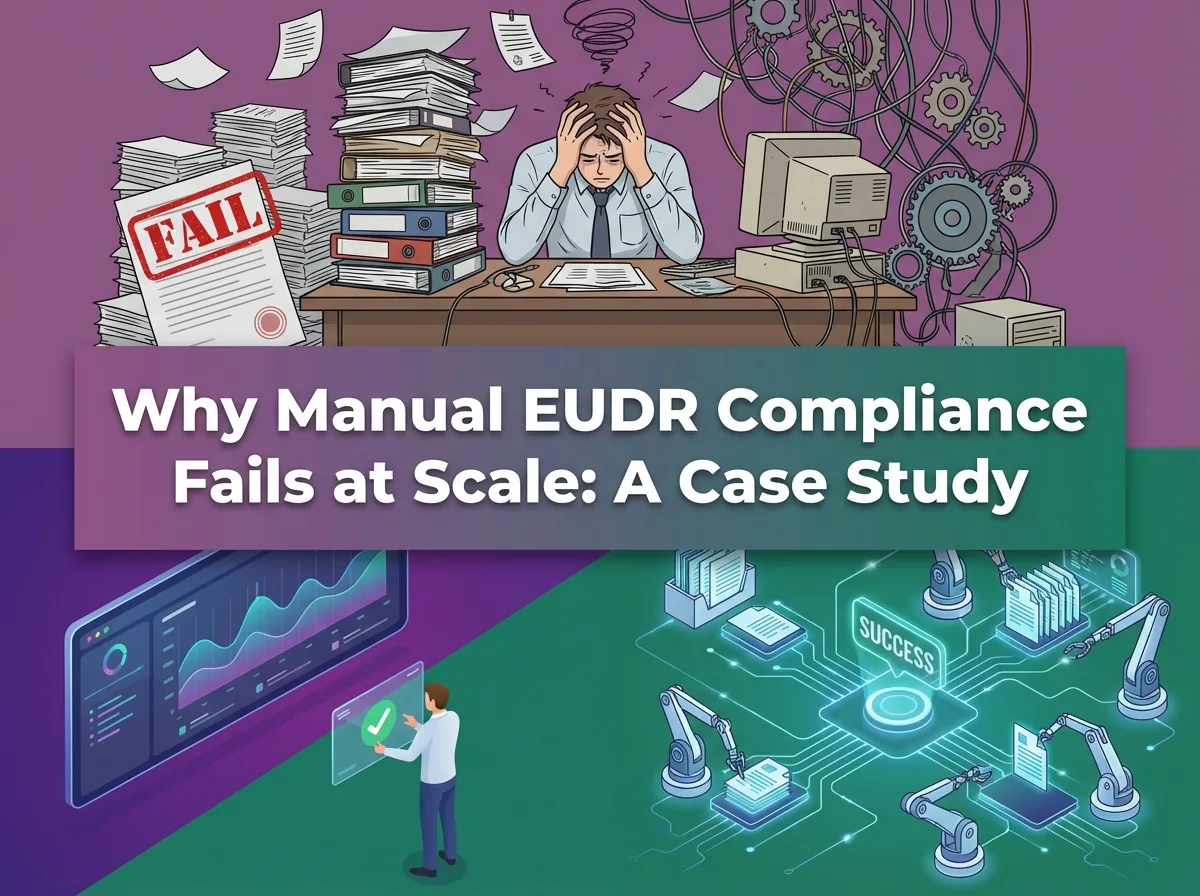
The Breaking Point: Preparing for EUDR at Scale
The EU Deforestation Regulation (EUDR) has been delayed again. The full system may not go live until 2026 or 2027. But the core problem has not changed. Operators still need a way to manage large volumes of Due Diligence Statements (DDS) once submissions begin.
Small consultancies see this pressure early. When their clients start preparing for EUDR at scale, the questions arrive fast. We recently worked with a consultancy that supported a three person French operator. The operator faced a future workload of thousands of DDS entries. They knew that entering this volume by hand would be impossible once the portal opens. They needed a way to automate the process and remove the risk of failed submissions.
The Three Reasons Manual EUDR Breaks at Scale
1. Outdated Technology
Even though the system is not live, the technical design is known. It depends on SOAP. This is old and fragile. It has strict time limits. It has layers of security that often fail without clear messages. It does not support batch work. It often produces unclear error codes. These limits will affect anyone who tries to submit a large number of DDS records.
2. Poor Visibility
The preview of the EUDR portal shows a long list of statements. It offers very limited ways to track the status of each record. Once submissions begin, operators that manage thousands of DDS entries will have to scroll through long lists to find the items that need attention.
A user on r/sysadmin described this kind of workload well: "Manual tracking has already become a huge time suck… as a one man show, automation is absolutely worth it." Our client saw the same risk. Without automation, tracking and fixing errors would take far too long.
3. A Mismatch Between Complexity and Team Size
Preparing DDS entries is not simple. The data format is strict. The rules are detailed. Teams must understand how to structure the data and how to send it correctly once the system opens. This work will only become harder as volumes grow.
A DevOps engineer on Reddit said, "I don't know anyone doing manual compliance checks in AWS these days." Most modern systems now rely on automation. Regulatory platforms still expect manual work, which creates a clear gap for operators.
What Happens When You Automate
Our client now has a system that can handle thousands of DDS submissions with almost zero failures once the EU portal goes live.
Before:
- Three people preparing for heavy manual work
- High risk of mistakes
- Long review cycles expected
After:
- Two hours a day of review
- Less than one percent estimated error rate
- Ready for real time submissions when the system opens
This lets the consultancy shift from manual work to higher value oversight. It also prepares their client for future growth.
The Path Forward
If you prepare EUDR compliance by hand today, the workload will rise once the portal opens. The rules will grow. The volume will increase. More staff will not fix this.
Automation is a practical path. A well-designed system gives consultants a tool they can use for their clients. It improves accuracy and lowers the time needed for daily work.
This is what we built for the French operator. It gives them a clean API, a searchable database, and retry rules that prevent failures once live submissions begin.
If you want to prepare for automated EUDR compliance, you can read our technical guide.
About This Case Study
This case is based on a real project completed in 2025. The operator is prepared to process thousands of DDS submissions each month once the system opens, with a projected success rate of 99.8 percent.
If you have questions about your EUDR setup, you can contact us or book a call.
Ready to automate your workflow?
Schedule a 30-minute call to discuss your automation needs. We'll help you identify your biggest bottleneck and show you what's possible.
Schedule a Call